 Young Composer Program
Learning tips
Hindustani Classical Vocal for Beginners: What You Learn in Your First Year
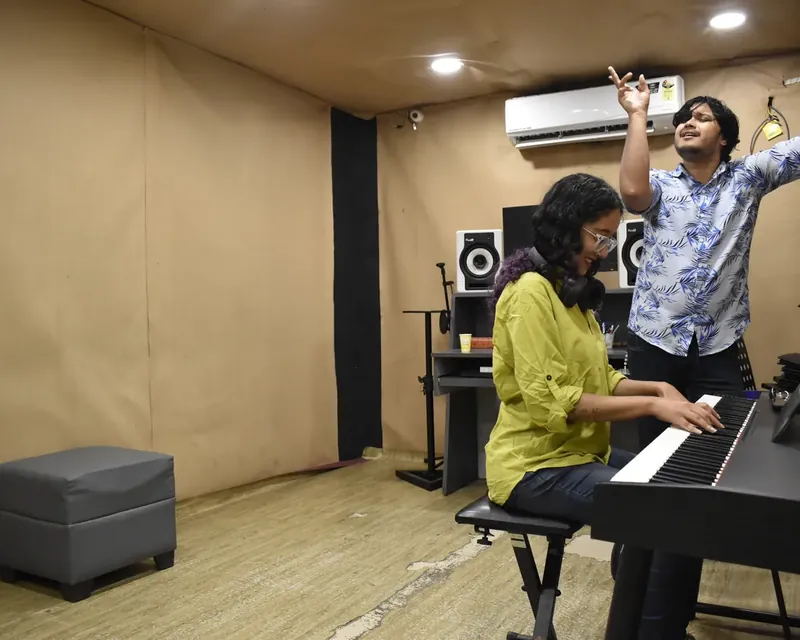
Hindustani classical music can seem vast from the outside: hundreds of ragas, complex rhythms, and singers who improvise for an hour on a single raga. The good news is that every great singer began in the same place, with one note and a tanpura. Here is what a beginner typically learns in the first year, and how to make daily practice, or riyaz, a habit.
Finding Sa with the tanpura
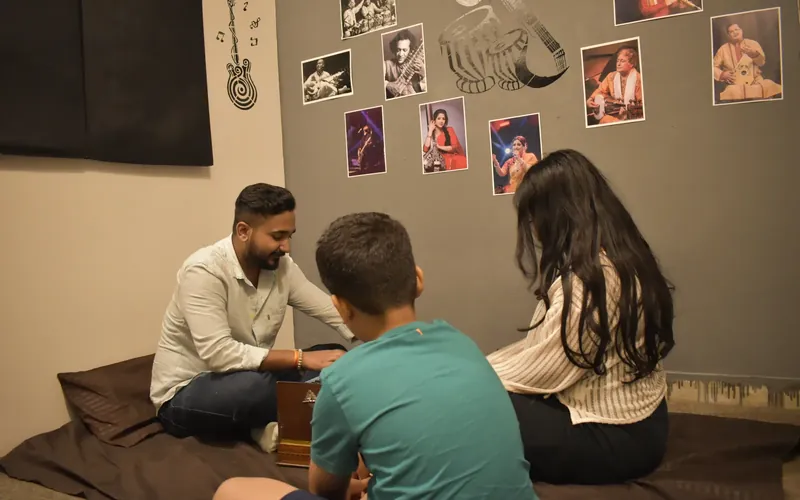
Everything starts with Sa, the home note. Your teacher will help you find a comfortable Sa for your voice, and you will spend time simply singing it against the drone of the tanpura, listening until your note locks in. This builds the most important skill in Hindustani music: singing perfectly in tune. You can practise with our free online tanpura, which lets you choose your Sa and tuning.
The seven swaras
Next come the seven swaras: Sa, Re, Ga, Ma, Pa, Dha and Ni. Five of them also have altered forms: komal (flat) Re, Ga, Dha and Ni, and tivra (sharp) Ma, making twelve notes in all. Beginners first learn the shuddh (natural) swaras, then add the komal and tivra notes as they meet them in ragas.
Alankars: the foundation exercises
Alankars, also called paltas, are patterned exercises such as Sa Re Ga, Re Ga Ma, Ga Ma Pa. They train your voice to move accurately between notes, build range and control, and sharpen your sense of rhythm. They are not glamorous, but they are the single biggest reason voices improve in the first year.
Thaats and your first ragas
Hindustani ragas are grouped into ten parent scales called thaats, a system organised by Pandit Vishnu Narayan Bhatkhande. Knowing the thaats helps you understand how ragas relate to one another. In the first year, many teachers introduce ragas such as Yaman, Bhupali or Bilawal, which have clear, memorable shapes. For each raga you learn its aroha (ascent) and avaroha (descent), its most important notes, the vadi and samvadi, and its characteristic phrases. Our raga explorer lets you hear the aroha and avaroha of many ragas.
Taal: singing with rhythm
Hindustani music is organised in rhythmic cycles called taals. Beginners usually start with Teentaal, a cycle of sixteen beats, and meet others such as Keherwa (eight beats), Dadra (six), Rupak (seven), Jhaptaal (ten) and Ektaal (twelve). You learn to keep the cycle with claps and waves of the hand, and to land on sam, the first beat, where the rhythm resolves. Practise with our taal player, which plays the theka for each taal at any tempo.
Your first bandish
A bandish is a fixed composition in a raga and taal. Beginners often start with a sargam geet (a song sung in note names) or a simple chhota khayal. Learning a bandish teaches you how a raga moves in real music, and it gives you something beautiful to perform.
Introduction to aalap and taans
By the end of the first year, many students begin simple aalap, the slow, unmetred exploration of a raga, and short taans, faster runs of notes. These are the first steps towards improvisation, and your teacher will introduce them gently, building on the alankars.
Building a riyaz habit
Riyaz is daily practice, and it is where progress really happens. A simple beginner routine might look like this:
- Five minutes of long notes on Sa with the tanpura.
- Ten minutes of alankars, slowly and in tune.
- Five to ten minutes on your current raga or bandish.
Even twenty minutes a day, done regularly, transforms a voice over a year. Early mornings are traditional, but the best time is the one you will keep.
Do you need a musical background?
No. Hindustani vocal is taught from the very first note, and many of our students begin as complete beginners, as children or as adults. What you need is curiosity, patience and a good teacher. Prism teaches Hindustani classical vocals in South Delhi, Gurugram and Faridabad, and at Origin Story in Sushant Lok.
Frequently asked questions
Can I learn Hindustani classical singing as a complete beginner?
Yes. Lessons start with Sa and the tanpura and build up step by step, so no musical background is needed.
How long does it take to sing a raga?
Many beginners sing the aroha, avaroha and a simple composition in their first raga within a few months. Mastery of a raga takes much longer, which is part of the joy.
How much riyaz should a beginner do?
About twenty minutes a day with a tanpura is a very good start. Regular daily practice matters more than long occasional sessions.
Which taal should I learn first?
Most students start with Teentaal, the sixteen-beat cycle used in a great deal of Hindustani music, then learn Keherwa, Dadra, Rupak, Jhaptaal and Ektaal.