 Young Composer Program
Parents
How to Choose a Music School in Gurugram: A Parent's Checklist
Gurugram has no shortage of music classes. Search for a music school near you and you will find dozens of options, from home tutors to large academies. The right choice depends less on a school's advertising and more on a few things you can check yourself in a single visit. This checklist walks you through them, whether you are choosing for a five-year-old or for yourself.
1. Start with the goal
Before comparing schools, be clear about what you want from lessons. Some children want to play the songs they love. Some families want graded exams and certificates. Some adults simply want a creative hour in a busy week. A good school will ask about your goal at the first meeting and shape lessons around it. If a school offers only one path for everyone, that tells you something.
2. Look at who teaches, and how
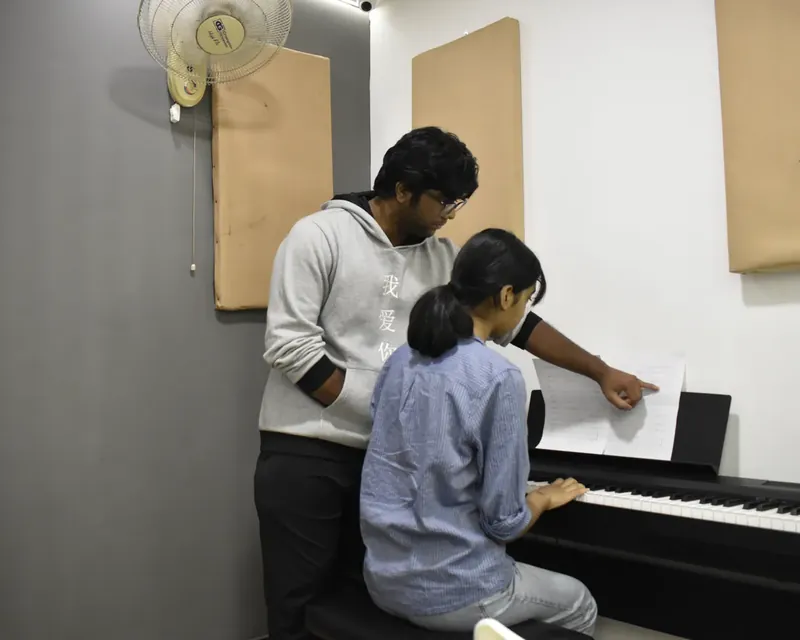
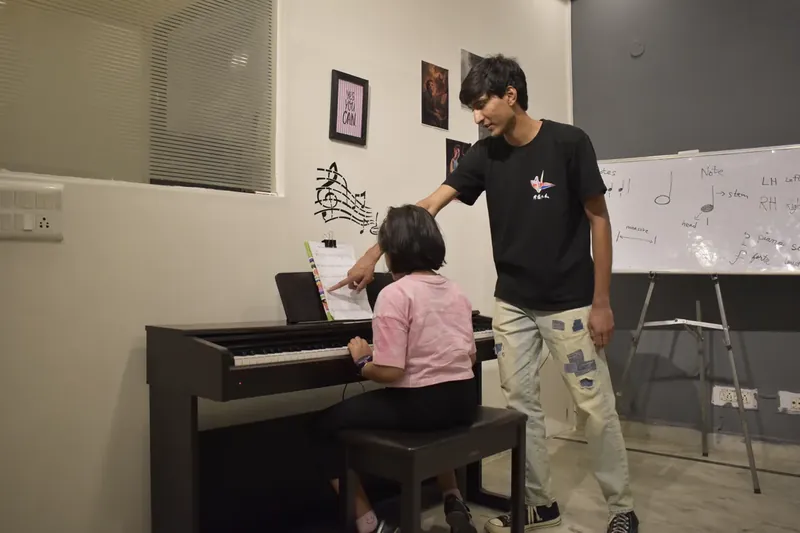
Teachers matter more than anything else. Look for teachers who play and perform themselves, because they bring real musicianship into the room, and who also follow a clear, structured syllabus so progress does not depend on the mood of the day. Ask how lessons are planned, how progress is tracked, and what happens if a regular teacher is away.
3. Understand the class format
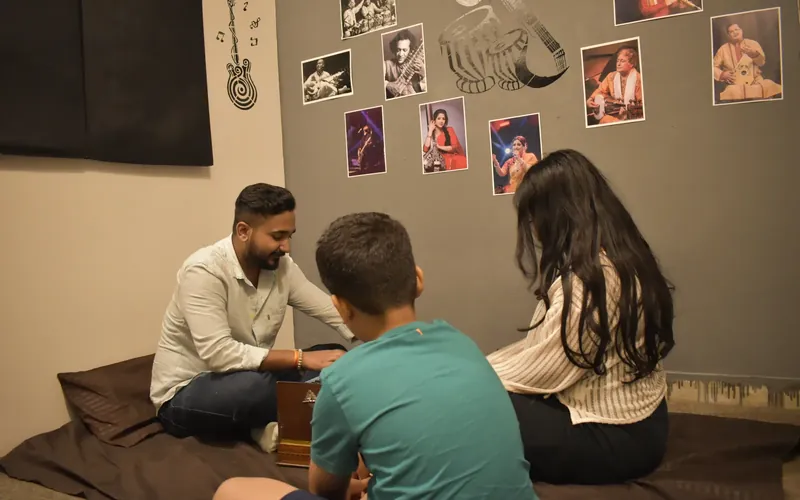
One-to-one lessons give complete individual attention. Small groups keep lessons sociable and motivating, and they teach students to listen and play with others, a skill every musician needs. The key word is small: a group of three or four still lets the teacher hear and correct each student in every class. At Origin Story in Sushant Lok, for example, groups have up to four students and meet once a week. Ask any school exactly how many students share a class.
4. Check the curriculum and the exam options
A school should be able to show you what a student learns at each level, from the first weeks to the advanced stages. If your child is interested in certificates, ask which exam boards the school prepares students for. Trinity, RSL (Rockschool) and ABRSM are the best known; each suits different instruments and styles. Our guide to choosing between Trinity, RSL and ABRSM explains the differences. Exams should be an option, never a requirement.
5. Ask where students perform
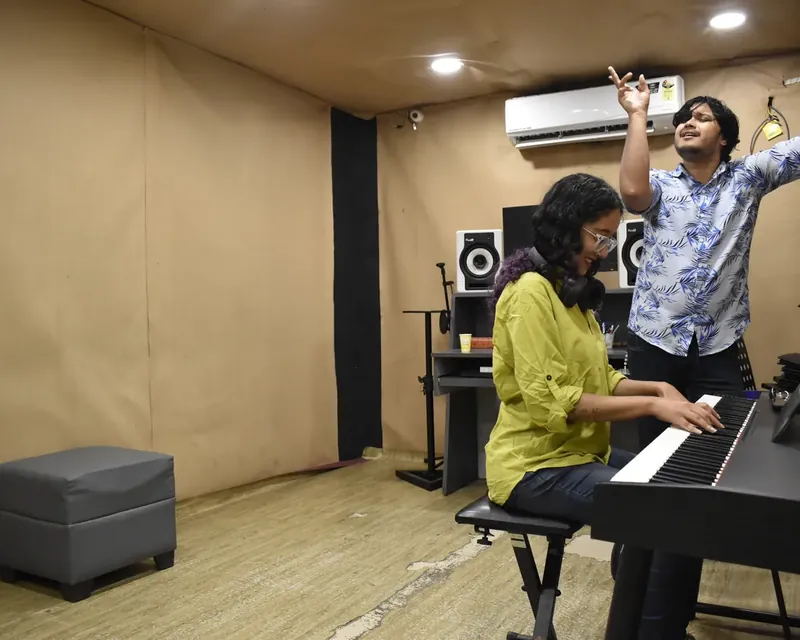
Playing for an audience is where confidence grows. Ask whether the school holds recitals, how often, and whether every student gets a chance to perform, not only the most advanced. Prism students perform at recitals held at venues such as The Piano Man and Hard Rock Cafe in New Delhi, with separate sessions for juniors and seniors. You can see recent recitals on our events page.
6. Book a trial class and watch closely
Most good schools offer a free demo class. Use it well. Notice whether the teacher learns your child's name, explains things simply, and gets them playing something within the lesson. Notice whether your child leaves smiling. Ask to see the room where regular classes happen and the instruments students use.
Questions to ask at the demo
- How many students are in a class, and how long is each class?
- What will my child be able to play after three months?
- How do you track and share progress with parents?
- Which exam boards do you prepare students for, and are exams optional?
- When is the next recital, and can every student take part?
- What is your policy on missed classes and make-up lessons?
7. Think about the commute
In Gurugram, travel time can decide whether lessons last a term or a year. A school fifteen minutes away that you can reach after school or work is worth more than a better-known one an hour away. Check class timings against your weekday traffic. Prism has two centres in Gurugram: the Sector 38 music school near Medicity, and Origin Story in Sushant Lok, a short walk from Galleria Market and minutes from Golf Course Road.
8. Ask about safety and professionalism
For children, a school should have clear rules on supervision, communication between teachers and students, and how concerns are handled. Ask to read the policy. Ours is published as our child safeguarding policy, and our student guidelines set out what students and parents can expect.
9. Plan for practice at home
Progress happens between lessons. Ask what your child should practise, for how long, and whether they need their own instrument straight away. Short, regular practice beats long, rare sessions. Free tools help: a metronome for steady timing, a tuner to keep the instrument in tune, and ear training to build listening skills.
The short version
Choose the school whose teachers you trust, whose class format suits your child, whose curriculum you can see, and which you can reach every week without stress. Then give it a few months: music rewards patience.
Frequently asked questions
What age can my child start music classes in Gurugram?
Many schools, including Prism, start children from age 3 with rhythm, singing and movement. Most instruments suit children from about 5 to 8 years old, depending on the instrument. Our guide on the best age to start music lessons explains this instrument by instrument.
Are group music classes as good as private lessons?
For most students, small groups of up to four are an excellent way to learn: lessons stay lively, students learn to play with others, and the teacher can still correct each person. Private lessons suit students with very specific goals or schedules.
Do we need to buy an instrument before the first class?
Not for the demo class. Once lessons begin, your child will need an instrument to practise at home. Ask the school to recommend the right size and type before you buy.
How often should my child have music classes?
Once a week is the usual rhythm for beginners, with short practice sessions on most other days. Consistency matters more than length.